
What Happened
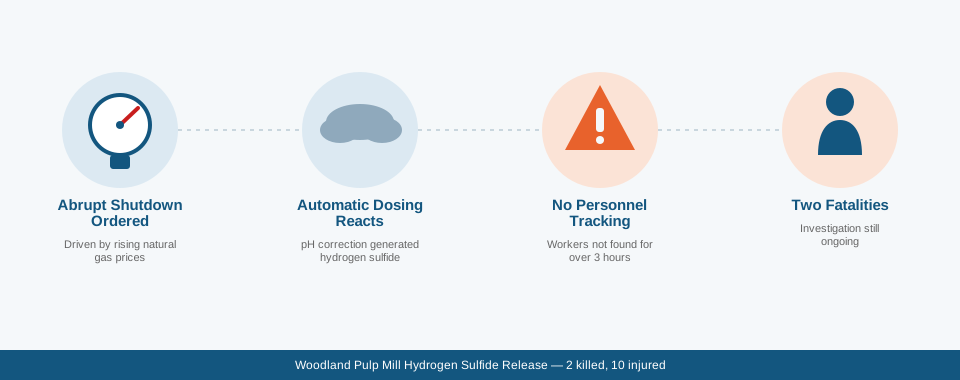
Facing a sharp rise in natural gas prices that pushed up operating costs, Woodland Pulp management decided to shut down most of the mill on short notice. Overnight, operators began shutting down and draining equipment in the Bleach Plant; process fluids with a high pH and containing sulfur compounds flowed into the mill's "acid sewer," a long process piping system that collects liquid waste from across the facility. A pH probe at the wastewater treatment plant detected the high pH and automatically increased sulfuric acid dosing into the sewer to compensate, a routine control action that instead reacted with the sulfur-containing fluids already in the pipe to generate hydrogen sulfide gas, a chemical immediately dangerous to life and health at just 100 parts per million. The gas escaped through holes and process openings in equipment into the Kraft Mill building, where two employees collapsed. Because Woodland Pulp had no system to track who was in the building or where during the shutdown, the two collapsed workers weren't discovered until more than three hours after the toxic gas had already dissipated. Kasie Malcolm, a 20-year-old chemical engineering co-op student, died the day after the release; Allen Hornberger, a 26-year-old process engineer with under five months at the company, died three weeks later after being removed from life support. Ten additional employees were exposed to the gas. Note on investigation status: as of this writing, CSB's investigation is still ongoing and no final report has been issued. This entry reflects CSB's July 2026 investigation update and OSHA's subsequent citations, not a completed root-cause investigation. Details may be revised once CSB's final report is published.
Root Causes (as identified so far)
- No fixed hydrogen sulfide detectors or alarms in the affected area: the Kraft Mill building where the release occurred had no stationary gas detection system to warn of a developing hydrogen sulfide hazard.
- No personal gas monitors issued to at-risk workers: the two employees who died were not provided with personal hydrogen sulfide monitors that would have alerted them directly to the gas's presence.
- No system to track personnel during the shutdown: the mill had no way to account for who was inside the building or where, which directly delayed the discovery of the two collapsed workers for several hours.
- A known hazard without adequate controls: CSB found Woodland Pulp was aware that hydrogen sulfide could form within the acid sewer system, but had not implemented sufficient safeguards to detect or control that known risk.
- A cold-weather, cost-driven shutdown decision: OSHA specifically noted the shutdown was prompted by rising natural gas prices, an operational and financial decision that appears to have proceeded without matching safety planning for the hazard it created.
Lessons Learned
- Fixed gas detection isn't optional for any building where a known toxic gas hazard exists, even one generated indirectly through routine control actions rather than a primary process. This incident shows how an automatic pH-correction response can itself become the ignition point for a fatal hazard.
- Personnel tracking and accountability systems during any shutdown or non-routine operation are not a bureaucratic nicety. The multi-hour delay in finding two collapsed workers here turned an already fatal exposure into a situation with no chance of timely rescue.
- Personal gas monitors need to be issued and required specifically for workers entering areas with a known or plausible toxic gas hazard, not treated as optional protective equipment.
- Operational decisions driven by cost pressure (like an abrupt shutdown triggered by energy prices) deserve the same hazard review as a planned outage. Schedule compression is a real risk factor, not just an operational inconvenience, and this is a pattern that shows up repeatedly across incidents in this database (Bayer CropScience, T2 Laboratories) whenever production or cost pressure compresses the time available for proper safety planning.